

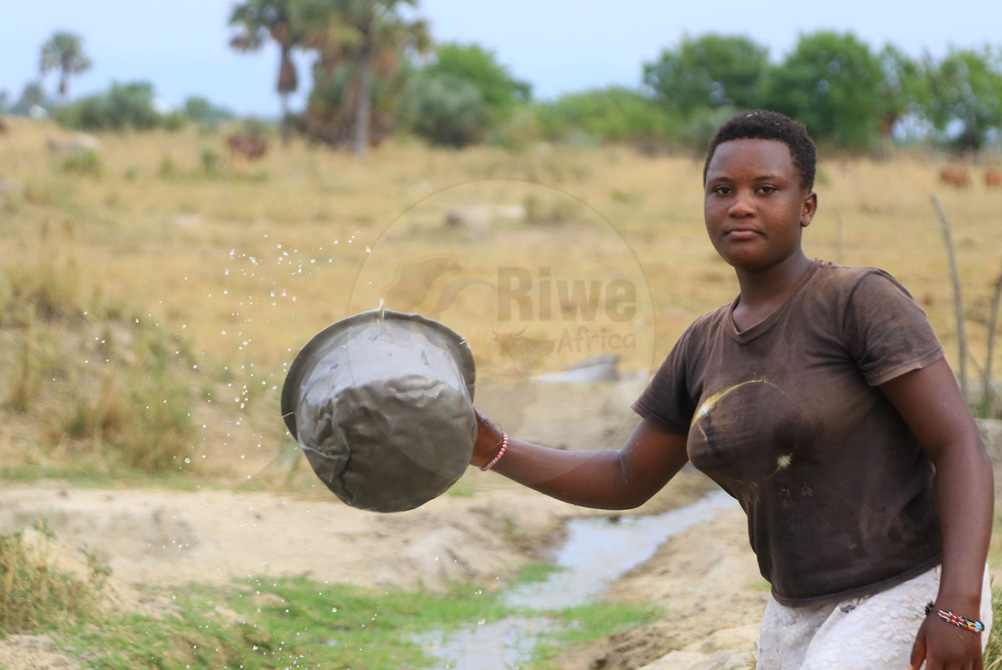
Pastoralist communities in Uganda face deep-rooted economic vulnerabilities driven by climate change, market exclusion, and limited livelihood diversification. More than 80% of the population in pastoral communities depends on livestock as their primary source of income. However, recurrent droughts, poor livestock management practices, disease outbreaks, and limited access to market threaten the sustainability of pastoral livelihoods. According to the Uganda National livestock census 2021, findings indicate that more than 70% of pastoral households live below the poverty line, with youth unemployment exceeding 78% in some districts. Women and youth remain the most affected, with limited access to financial services, productive assets, and alternative income streams.
RIWE_AFRICA’s Livelihood program aims to enhance the economic resilience of pastoralist communities by promoting sustainable livelihoods. The organization works with pastoralist communities to increase food security, improve economic opportunities for youth and women pastoralists, and reduce poverty through inclusive development and skills empowerment initiatives.
Using community-driven approaches, RIWE engages with local leaders, women, and youth to identify the best ways to build sustainable and diversified livelihoods. By focusing on skills development, proper resource management, and market linkages, we ensure that pastoral communities can create self-sustaining enterprises and improve their quality of life. We also work with these communities to promote financial literacy, entrepreneurship, and access to income-generating opportunities while paying attention to community-driven solutions that ensure long-term sustainability.
Our interventions under this thematic area particularly target women pastoralists and youth (aged 15–35), ensuring that they have the tools, resources, and knowledge required to thrive in a rapidly changing world. By focusing on youth and women, we aim to break the cycle of poverty and enable the entire pastoral communities in Uganda to flourish.
Project Title: Livestock for Resilient Future (L4F) Project.
Period of Implementation:
2024 – 2027
Other Partners:
Geographic Coverage:
Ntoroko District.
Target Population:
Smallholder Livestock Farmers.
To improve livestock productivity and resilience among smallholder Women and Youth livestock farmers by strengthening climate-smart and animal-health-responsive livestock production systems in cattle, goats, and Poultry value chains.
The Livestock for Resilient Future (L4F) project aims to strengthen livestock productivity and resilience among women and youth smallholder pastoral and agropastoral farmers in Ntoroko District.
Pastoral and agropastoral communities in the District continue to face recurrent droughts, water scarcity, and livestock disease outbreaks, all of which severely undermine livestock productivity and household incomes. This project responds through an integrated approach that combines feeding systems improvement, sustainable water Management, rangeland regeneration, and animal health services.
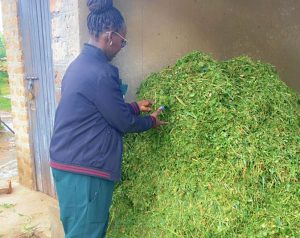
The project promotes sustainable animal pasture through supporting farmers to establish improved pasture gardens, paddocking, and rotational grazing systems to allow rangeland regeneration. Farmers are trained in fodder production, silage making, and feed conservation to ensure year-round feed availability, particularly during prolonged dry seasons.
To address chronic water shortages, RIWE-AFRICA supports livestock farmers to install solar-powered water harvesting systems and construct small-scale community dams.
Recognizing that improved feeding and water alone cannot deliver productivity gains without healthy animals. RIWE_AFRICA works with trained para-veterinarians as community extension workers who provide frontline animal health services to smallholder livestock farmers at the household level.
These para-vets support:
Early disease detection and reporting
Basic treatment and vaccination follow-up
Farmer education on disease prevention, biosecurity, and improved husbandry practices.
This decentralized approach improves timely access to animal health services, reduces livestock mortality, and strengthens disease preparedness at the community level.
RIWE_AFRICA provides continuous technical guidance, farmer training, and monitoring through Cooperatives and farmer groups. The cooperative and farmer group model promotes peer learning, collective action, cost-sharing, and continuity, hence enhancing sustainability beyond the project period.
Project Title: Legal Empowerment Fund (LEF) Project.
Period of Implementation:
2023 – 2025
Donor:
The Fund for Global Human Rights (FGHR)
Other Partners:
Community
Paralegals
Kasese District Local Government
Legal Aid I
nstitutions
Geographic Coverage:
Kasese District: Nyakatonzi & Muhokya Sub-counties
Target Population:
Pastoralist women, Widows, and youth from the Basongora pastoralist ethics groups.
PROJECT GOAL
To amplify the voice of pastoralist women by equipping them with knowledge and power to know, use, and shape their land and property laws, and to hold duty bearers accountable for equitable and gender-responsive land governance.
Project Objectives
DETAILED PROJECT DESCRIPTION
Pastoralist women in Uganda remain among the least protected and least represented in land governance systems. While 70% of Uganda’s wealth is generated on land, fewer than 10% of Women own land, and in pastoralist communities like Kasese among the Basongola and in Ntoroko among the Batuku, ownership drops to 4 – 7%.
Social norms, male inheritance traditions, and low legal literacy continue to deny Women pastoralists their rights to own, inherit, control, and benefit from land and livestock. Without these rights, women are unable to escape poverty, secure food for their families, or safeguard their well-being.
The Legal Empowerment Fund (LEF) Project, implemented by RIWE_AFRICA, responds to these injustices by empowering pastoralist women in Kasese District to know, use, and shape the laws that govern their land and lives.
Major activities include:
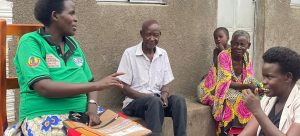
Through the Community paralegals, RIWE_AFRICA conducts legal awareness sessions with pastoralist women, equipping them with practical knowledge about inheritance laws, Land Act provisions, spouses’ rights to matrimonial property, customary and statutory laws, reporting channels, and legal remedies. The sessions open space for women to discuss barriers and begin envisioning alternative, equitable practices.
The project trains community paralegals and male change agents who document land rights violations, support women to access legal aid, interpret laws in simple language, and influence men to support women’s land ownership. The involvement of men who are traditionally gatekeepers of land is reducing resistance and promoting equitable land ownership.
RIWE_AFRICA supports the creation of women-led movements that mobilize local leaders, monitor land injustices, and advocate for gender-sensitive land governance. These movements have become engines of accountability, amplifying the voices of marginalized Basongora pastoralist women.
RIWE_AFRICA convenes district and sub-county dialogues with Land officers, Legal practitioners, Local councils, Cultural leaders, and Political leaders. These forums create pathways for influencing gender-responsive policies and holding leaders accountable for land-related decisions. As a result of these interventions, we now have a women pastoralist representative appointed to the District Land Board.
To shift deep-rooted norms, the project implements Men’s engagement sessions, Cultural dialogues, IEC material dissemination, and Radio talk shows & jingles. This has reached thousands of pastoralist community members and strengthened public understanding of women’s land and property rights.
*Want to learn more about this project? Reach out to us at info@riweafrica.org*